


Tesla is taking robotics to the next level with its Optimus humanoid robot program, and the upcoming Optimus V3 promises to be a game-changer. Designed to be a versatile, AI-powered robot capable of performing a wide range of tasks, Optimus V3 represents Tesla’s vision of a future where humanoid robots are part of daily life, both at work and at home.
What is Tesla Optimus V3?
The Tesla Optimus V3 is the next iteration of Tesla’s humanoid robot. While Tesla has already shown earlier prototypes, V3 is expected to feature:
- More humanlike movement and balance
- Advanced AI for perception and task execution
- Enhanced dexterity, especially in its hands
- Optimized design for mass production
Elon Musk has emphasized that the Optimus V3 is being designed with real-world usability in mind, not just demonstrations, making it a practical robot for everyday tasks in homes and industries.
Design and Features
Although Tesla has not released the full V3 design yet, early reports suggest it will have:
- Humanlike stature and articulation for natural movement
- Lightweight but durable frame for easy mobility
- Sophisticated hand and finger design for precision tasks
- Integrated AI systems to navigate and interact with environments
These features aim to make Optimus V3 capable of tasks like carrying items, assisting in industrial settings, and potentially even household chores.
Performance and AI
Tesla Optimus V3 is expected to integrate Tesla’s advanced AI systems, similar to those used in self-driving cars. Key capabilities include:
- Autonomous navigation and obstacle avoidance
- Machine learning for task optimization
- Vision-based perception to recognize objects and people
- Continuous improvement through updates, just like Tesla vehicles
This AI-driven approach allows the robot to adapt to new environments and tasks without needing extensive reprogramming.
Production and Timeline
Tesla plans to reveal a production-intent prototype of Optimus V3 in early 2026, possibly around the first quarter. The company has set ambitious goals:
- Mass production target: Up to 1 million units/year by the end of 2026
- Long-term vision: Robots for both industrial and personal use
- Continuous development: Iterative updates to improve dexterity, AI, and safety
If Tesla achieves these goals, Optimus V3 could be the first humanoid robot to see large-scale real-world adoption.
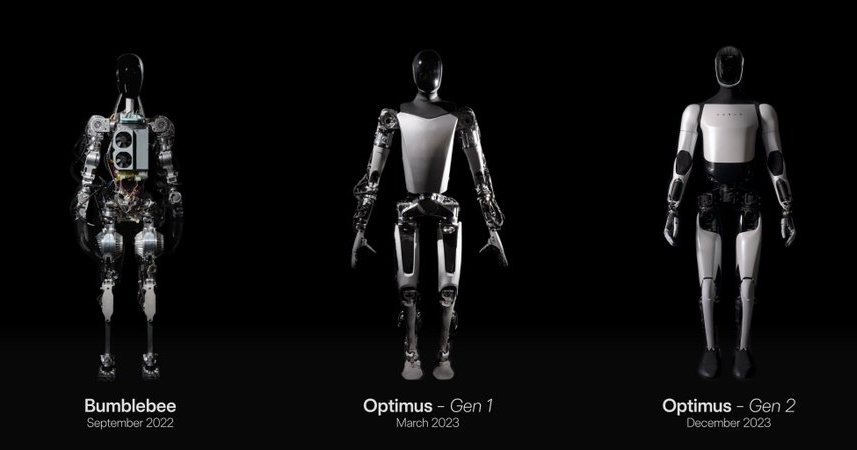
Applications – Where Optimus V3 Could Make a Difference
Tesla Optimus V3 is designed to assist humans in everyday tasks and industrial work, including:
- Carrying and moving objects in warehouses
- Performing repetitive or physically demanding tasks
- Household assistance (cleaning, lifting, organizing)
- Collaboration with humans in workplaces and factories
Its AI-driven decision-making makes it a potential multi-purpose robot, capable of handling tasks that previously required human labor.
Why Tesla Optimus V3 Matters
Optimus V3 is not just a technological showcase — it represents a shift in how humans interact with robots. Some reasons it’s important:
- Automation and Efficiency: Can help reduce manual labor and improve productivity
- AI Integration: Learns and adapts to new environments
- Scalability: Tesla plans for mass production, making humanoid robots more accessible
- Innovation in Robotics: Combines Tesla’s experience in AI, battery tech, and mobility
In short, Optimus V3 could redefine the future of work and personal assistance.
Tesla Optimus V3 –Feature Table:
| Feature | Details |
| Product Name | Tesla Optimus V3 (Next-Gen Humanoid Robot) |
| Type | AI-Driven Humanoid Robot |
| Developer | Tesla, Inc. |
| AI Capability | Integrated AI for perception, navigation & tasks |
| Movement | Humanlike locomotion & balance |
| Dexterity | Advanced hand design (improved precision) |
| Potential Applications | Industrial work, household tasks, automation |
| Release Timeline | Prototype visible in Q1 2026 (expected) |
| Mass Production Goal | Targeting up to 1M units/year by end of 2026 |
| Status | Still under development |
Final Thoughts
The Tesla Optimus V3 is a bold step toward mass-market humanoid robots. With humanlike movement, AI-driven perception, and plans for large-scale production, it’s more than just a robot — it’s a vision of a future where humans and robots coexist seamlessly.
While we await the first production-ready prototype in 2026, the Optimus V3 is already shaping up to be one of the most exciting advancements in robotics in recent years.
